2026-06-13
「That's a good point, but…」の使い方|反論・補足で使えるビジネス英語20選
「反論したいけど、角が立つのが怖い」
英語会議で相手の意見に同意できない場面。日本語なら「それも一つの考え方ですね、ただ…」と柔らかく返せるのに、英語だとつい黙ってしまったり、逆に直接的すぎる言い方になってしまったりする——そんな経験はありませんか。
“That’s a good point, but…” は、英語ネイティブが日常的に使うクッション表現の代表格です。相手の意見を認めながら、自分の反論・補足を加えられるため、議論を攻撃的にせずに進められます。
この記事では、“That’s a good point, but…” を軸に、ビジネス英語会議で使える反論・補足フレーズを20選紹介します。
この記事でわかること
- “That’s a good point, but…” の正しい使い方と例文
- 同系統クッション表現のバリエーション(20選)
- 強さ別・場面別の使い分けガイド
- 日本人がやりがちなNG表現
- 「反論の3ステップ」を使った返答フロー
”That’s a good point, but…” とは何か
直訳すると「それは良い点ですね、でも…」。相手の発言を肯定した上で、「ただし」「一方で」という視点を加える表現です。
なぜこのフレーズが機能するか
英語圏のビジネス文化では、相手の意見を最初に認めることが建設的な議論の基本マナーとされています。いきなり “But…” や “No, I think…” と始めると、相手を否定する印象を与えます。“That’s a good point” という前置きが、議論の温度を下げながら自分の意見を通す効果を持ちます。
使う場面:
- 相手の提案に問題点を指摘したいとき
- 別の視点や条件を追加したいとき
- 結論に同意できない部分があるとき
カテゴリ1:基本クッション表現 5選
1. That’s a good point, but I think we should also consider…
(それは良い点ですね、ただ〜も考慮すべきかと思います)
例文:
A: We should increase the marketing budget to drive more traffic.
B: That’s a good point, but I think we should also consider improving conversion rates first.
2. I see what you mean, but…
(おっしゃる意味はわかります、ただ…)
“That’s a good point” よりやや控えめな認め方。部分的に理解したことを示しながら反論できます。
例文:
A: The timeline is too tight. We need three more weeks.
B: I see what you mean, but the client expects delivery by month-end.
3. You raise a valid concern, however…
(おっしゃる懸念はもっともです、しかし…)
“concern(懸念)” を扱う場面に適した表現。相手の不安を尊重しながら反論できます。
例文:
A: I’m worried the new system will disrupt existing workflows.
B: You raise a valid concern, however, the transition plan includes a two-week support period.
4. I understand your perspective, but…
(あなたの視点は理解します、ただ…)
視点の違いを認めながら反論する表現。意見の相違を「どちらが正しい」ではなく「視点の違い」として扱えます。
例文:
A: From a design standpoint, simplicity is key.
B: I understand your perspective, but from the sales side, we need more product features visible.
5. That’s a fair point, although…
(それは公平な指摘ですね、とはいえ…)
“although” は “but” より文語的で、フォーマルな会議に向いています。
例文:
A: Reducing headcount would cut costs significantly.
B: That’s a fair point, although we’d risk losing key talent at a critical time.
カテゴリ2:一部同意しながら反論するフレーズ 5選
6. You’re right that X, but Y is also important.
(〜はおっしゃる通りです、ただ〜も重要です)
例文:
You’re right that speed is important, but accuracy is also critical for this project.
7. I agree with the general idea, but I have some reservations about the timing.
(大きな方向性には同意しますが、タイミングについては懸念があります)
“reservations(懸念・留保)” を使うことで、完全な反対でなく「条件付き同意」を示せます。
例文:
I agree with the general idea of expanding to overseas markets, but I have some reservations about the timing given our current cash flow.
8. That makes sense in theory, but in practice…
(理論的にはその通りですが、実際には…)
「原則はわかる、でも現実は違う」という論点を展開するフレーズ。
例文:
That makes sense in theory, but in practice, our clients rarely respond to cold outreach within 48 hours.
9. I take your point, but there’s another angle to consider.
(おっしゃる点は受け取りました、ただ別の視点もあります)
“take your point” は “understand your point” よりやや格式があります。
例文:
I take your point on cost reduction, but there’s another angle to consider — the impact on customer satisfaction scores.
10. Absolutely, and at the same time…
(そうですね、その上で…)
“but” を使わずに反論する洗練された方法。“and” で繋ぐことで対立でなく補足の印象になります。
例文:
A: We need to move fast on this opportunity.
B: Absolutely, and at the same time, we need to make sure due diligence is complete before signing.
カテゴリ3:代替案をセットで提示する反論フレーズ 5選
反論するだけでなく、代替案をセットで提示すると議論が前に進みます。
11. I see your point, but what if we…?
例文:
I see your point, but what if we ran a pilot program first to test the concept?
12. That’s one approach. Another way to look at it is…
例文:
That’s one approach. Another way to look at it is to start with the highest-value customers and expand from there.
13. Rather than X, could we consider Y?
例文:
Rather than cutting the entire feature, could we consider a simplified version for the initial release?
14. I hear you, but I’d suggest we explore an alternative…
例文:
I hear you, but I’d suggest we explore an alternative before committing to this vendor.
15. That could work, though I wonder if…
例文:
That could work, though I wonder if there’s a more cost-effective solution available.
カテゴリ4:オンライン会議で使える反論フレーズ 5選
Zoom等のオンライン会議では、発言タイミングの取り方と聞き返しの表現も重要です。
16. Sorry to jump in, but I’d like to add something here.
(すみません割り込んで、一点追加させてください)
17. If I can just push back on that for a second…
(少し反論させてください——)
“push back” はビジネス英語で「反論する」という意味でよく使われます。
18. I want to flag a potential issue with that approach.
(そのアプローチについて一点懸念を挙げたいのですが)
19. Can I offer a different perspective?
(別の視点を提示してもよいですか?)
20. I’m not sure I fully agree. Could we discuss this further?
(完全には同意しかねます。もう少し議論できますか?)
反論の3ステップ
どのフレーズを選ぶにしても、以下の3ステップで組み立てると自然に聞こえます。
ステップ1: 相手の意見を認める
“That’s a good point.” / “I see what you mean.” / “You raise a valid concern.”
ステップ2: 転換語で自分の意見を接続する
“but…” / “however…” / “although…” / “at the same time…”
ステップ3: 代替案・追加条件・新たな視点を提示する
“I think we should also consider…” / “What if we…?” / “Another angle to look at is…”
強さ別使い分けガイド
| 強さ | フレーズ | 使う場面 |
|---|---|---|
| 穏やか | ”I see what you mean, but…” | 上司・取引先への反論 |
| 標準 | ”That’s a good point, but…” | 同僚・チーム内での議論 |
| やや強め | ”I’m not sure I fully agree.” | 明確に反対したい場合 |
| 最も強い | ”I’d like to push back on that.” | 重要な決定を覆したい場合 |
NG表現:日本人がやりがちな間違い
NG1:「No, that’s wrong.」
直接的すぎてビジネス会議では使いません。相手を否定する前に、必ず認める言葉を入れてください。
NG2:「I don’t agree.」で終える
“I don’t agree” は使えますが、理由や代替案なしに終えると議論が止まります。必ず “because…” や “I think a better approach would be…” と続けてください。
NG3:「But, but, but…」と繰り返す
“but” を会話の中で多用しすぎると、否定的な印象を与えます。“however,” “although,” “at the same time” と交えて使いましょう。
返答力を鍛える練習法
フレーズを覚えても、実際の会議では相手の発言を聞きながら瞬時に返答を選ぶ必要があります。この「即興の返答選択」を練習するには、実際の会議シナリオの中でパターンを反復することが最も効果的です。
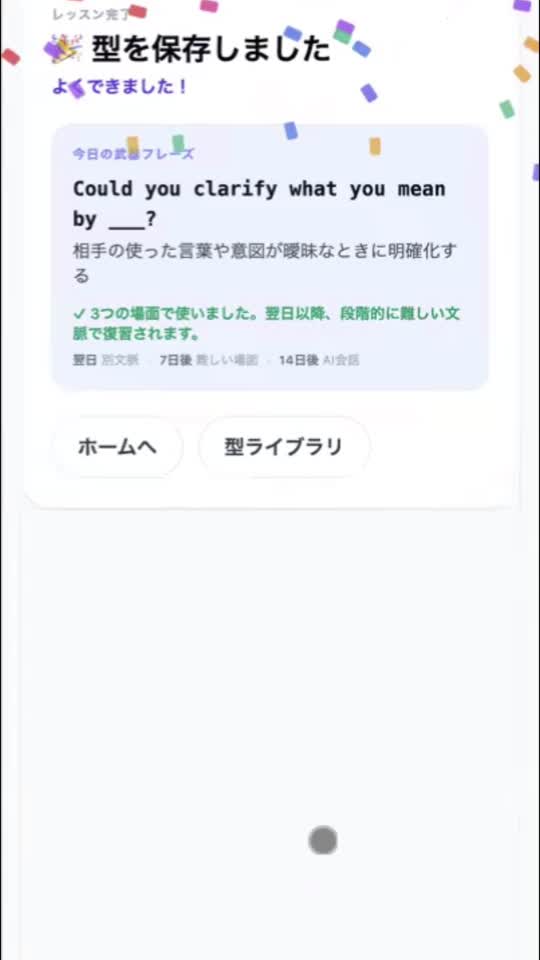
Reply English では、AIが議題を提示し、あなたが “That’s a good point, but…” を使って返答する形で、会議の反論・補足フローを繰り返し練習できます。知識として知っている状態から、口から出る状態へ移行するためのドリルです。
よくある質問(FAQ)
Q. “That’s a good point” は褒めすぎですか?
A. ネイティブにとっては自然なクッション表現です。「褒め言葉」としてより「転換語」として機能しており、過度な賞賛には聞こえません。
Q. “but” の代わりに “however” を使うと格式が上がりますか?
A. はい。“however” は文語的でフォーマルな場に向いています。フォーマル会議では “That’s a fair point, however…” を使うとより適切です。
Q. 上司への反論は特に気をつけることがありますか?
A. 疑問形を使うと押しつけがましさが減ります。“I wonder if…” / “Would it be worth considering…?” のように疑問形で返すと自然です。
Q. 反論と批判の違いは?
A. 反論は「別の視点の提示」、批判は「相手の案の否定」です。英語会議では常に代替案をセットで提示することで、反論が建設的な議論に変わります。
Q. “push back” は失礼ですか?
A. 対等な立場のビジネスパートナー間や上司への正式な場面では自然な表現です。「強く異議を唱える」ニュアンスがあるので、“I’d like to gently push back on that…” のように “gently” を添えると柔らかくなります。
まとめ
英語会議で角を立てずに反論するための構造は、シンプルです。
認める → 転換 → 代替案・追加視点
代表フレーズ:
- “That’s a good point, but I think we should also consider…”
- “I see what you mean, but…”
- “You raise a valid concern, however…”
- “Absolutely, and at the same time…”
これらのフレーズは「知っている」だけでは本番で使えません。実際の会議の流れの中で繰り返し練習することで、考えなくても口から出る状態になります。
Reply English を無料で試す → では、会議シナリオの中で反論・補足フレーズを繰り返し練習できます。7日間無料トライアルで体感してください。
※ AI 下書き。公開前に必ず人間レビュー・修正を行ってください。価格情報は各公式サイトで最新情報を確認のこと。
返答力を鍛えてみませんか?
Reply English は、英語会議のビジネスシナリオで「返す」練習に特化した AI 練習アプリです。7日間無料で体験できます。
今週の会議英語を練習する →7日間無料 · カード不要 · ダウンロード不要